Sun Sep 06
The Release Certificate Was Never Built to Carry an AI's Fingerprints
AI-assisted maintenance findings now feed into airworthiness release certificates that have no field for model provenance, and insurers are noticing first.
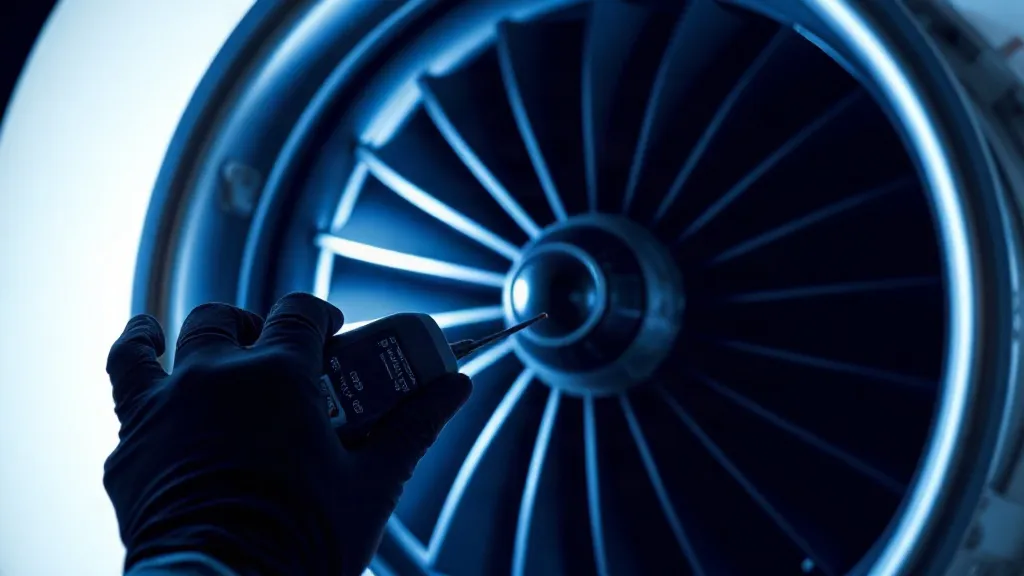
The instrument of trust
Every part that goes back into an aircraft carries a release certificate. The FAA calls it Form 8130-3. EASA calls it Form 1. CAAC calls it AAC-038. Three forms, three regulators, one function: a signed statement that a part was produced or maintained in conformity with approved data and is fit to fly, as Block Aero’s glossary lays out plainly. This document, not the AI system that increasingly informs it, is still the legal instrument of trust in the supply chain.
That matters right now because predictive maintenance and defect-detection models are moving upstream of that signature. An AI vision system flags a hairline crack. A model predicts remaining useful life on a component. A technician reviews the output and signs the release. The finding that actually drove the airworthiness decision lives in a model log somewhere. The certificate that legally certifies the decision has no field for it.
The provenance blind spot
This is not a hypothetical gap, it is a structural one. Prince Aviation’s CEO, discussing FAA-EASA operational friction after inducting a Citation M2, made the adjacent point directly: AI cannot replace the technician, and the industry needs more cooperation to close the differences between systems, as reported by AviNews. The technician remains the accountable signer. But accountability without traceable provenance is a paper trail with a hole in the middle. If a model version changes, if training data shifts, if the finding later proves wrong, there is currently no standardized way to reconstruct what the AI actually contributed to a release that already went out the door.
Insurance will verify before regulators do
Regulators move on their own clock. Insurers are moving now. CSIS’s analysis of the insurance industry’s retreat from AI describes a proposed NIST-run anonymized incident database modeled explicitly on NASA’s Aviation Safety Reporting System, precisely because aviation already knows how to run a no-fault reporting model that insurers can trust. The parallel signal from the general insurance market is sharper still. PropertyCasualty360’s coverage of Clearspeed frames AI adoption as exposing a “verification gap” that underwriters are unwilling to price around. Applied to aerospace MRO, the logic is direct. An insurer asked to underwrite a fleet’s maintenance program will ask what verified AI systems contributed to release decisions. If the answer lives nowhere auditable, coverage terms will reflect that uncertainty before any regulator issues guidance.
What to build now
The forms will not evolve quickly. ARP4754B’s slow, uneven adoption across FAA and EASA, detailed by Jama Software, is evidence enough that standards bodies move in years, not quarters. Programs deploying AI in inspection or predictive maintenance should not wait for a fourth box on Form 1. Build a parallel provenance record now, aligned to ISO 42001’s AI management system documentation requirements, that ties every AI-informed finding to a model version, a data lineage, and a human sign-off, independent of what the regulatory form currently asks for.
The certificate proves the part is airworthy. It was never designed to prove the AI was right. Until it is, that proof has to live somewhere else, and the organizations building it now will be the ones insurers and regulators trust first.
Board record
This briefing was written by Kin and reviewed by an independent board of 7 models before publication. Ruling: CLEARED.
| Seat | Reviewer | Finding |
|---|---|---|
| Chair · Editorial Judgment | Claude | cleared. The core argument—that release certificates lack fields for AI provenance, creating an accountability gap—is coherent and logically constructed, but the claim that insurers are ‘moving now’ on aerospa |
| Source & Claim Verification | Qwen · local | cleared. All factual claims are supported by citations, but some sources (e.g., Airplane Geeks Podcast, Drone Inspection Regulatory Compliance Checklist) are not directly referenced in the text, which could im |
| Regulatory & Framework Fidelity | Mistral | cleared. The briefing accurately reflects ISO 42001’s AI management system documentation requirements but lacks explicit mapping to EU AI Act risk tiers or FDA/MDR/IVDR traceability specifics. |
| Technical Accuracy | Llama | cleared. The article accurately highlights the gap in provenance and auditability for AI-informed decisions in aerospace MRO, and correctly identifies the need for a parallel provenance record aligned to ISO 4 |
| Bias, Balance & Hype Control | Gemini | cleared. The briefing effectively identifies and counters potential vendor hype by focusing on structural gaps and external pressures (insurance) rather than AI’s capabilities, though it could more explicitly |
| Novelty & Non-Duplication | Grok | cleared. The core framing—release certificates (8130-3/Form 1) as a structural provenance blind spot for upstream AI findings, with insurers forcing parallel ISO 42001-style records ahead of regulators—is a di |
| Validation | DeepSeek | cleared. The central claim that release certificates lack a field for AI provenance is factually correct and validated by the provided glossary source defining the form’s purpose and fields. |
Sources cited: 11. Validation challenges: 0. Review cost: about $0.04. Learn how these briefings are written and verified.